By Entertainment News Staff
When Prince Poppycock stepped onto the America’s Got Talent stage in 2010, viewers knew almost immediately that they were watching something unusual.
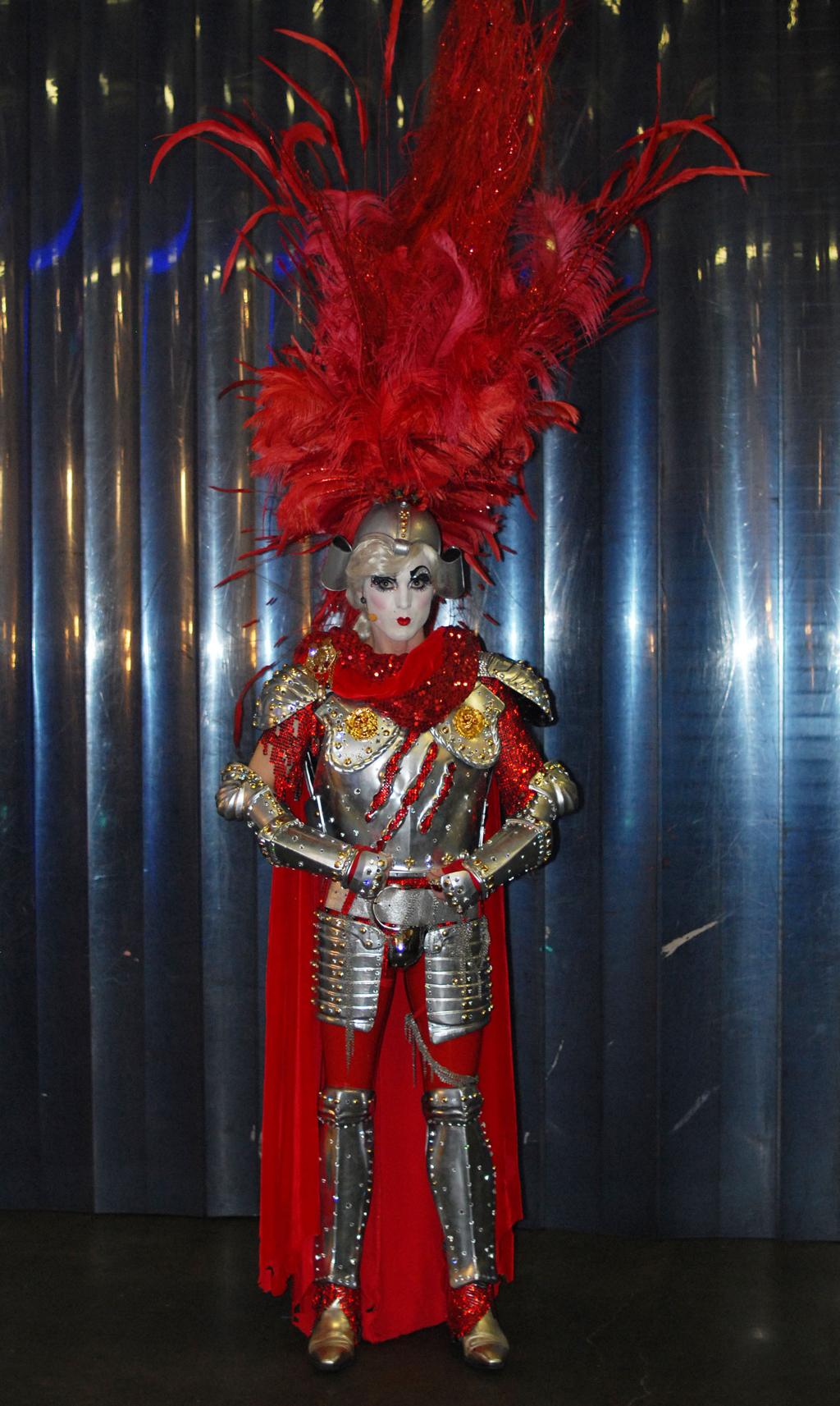
There was the enormous white wig.
There was the elaborate makeup.
There were sparkling costumes.
There was the theatrical personality.
And then there was the voice.
Behind the flamboyant character was John Quale, a classically trained singer and performer who transformed himself into Prince Poppycock for Season 5 of America’s Got Talent. His combination of opera, comedy, theatricality and extravagant presentation quickly made him one of the season’s most recognizable contestants.
He ultimately reached the Season 5 finale, finishing fourth, behind winner Michael Grimm, runner-up Jackie Evancho and third-place finisher Fighting Gravity.
But the television performances only tell half the story.
Behind the curtain were costume changes, makeup, wigs, microphones, rehearsals, stage directions, nervous moments—and the kind of backstage situations that could make even an opera prince laugh.

Meet the Man Behind the Poppycock
Prince Poppycock was the stage persona of John Quale.
Quale had a background in musical theater and classical singing before appearing on America’s Got Talent. The character allowed him to combine his formal vocal training with comedy and extravagant theatrical presentation.
That combination was his secret weapon.
Many contestants arrived on AGT with one obvious talent.
Prince Poppycock arrived with several.
He could sing.
He could act.
He could create a character.
And he understood spectacle.
The result was a performance that felt part opera recital, part Broadway production and part comedy sketch.
The First Challenge: Becoming Prince Poppycock
Creating a character is one thing.
Creating a character that has to survive national television is something else.
The transformation involved hair, makeup, clothing, posture, voice and personality.
John Quale had to disappear behind the character.
Prince Poppycock had to appear.
That process probably made the backstage area look less like a television studio and more like a royal dressing room.
A fictionalized exchange might go like this:
Stylist: “John, are you ready?”
John: “Almost.”
Stylist: “What’s missing?”
John: “The prince.”
Stylist: “He’s standing in front of me.”
John: “That’s just John.”
The dialogue is fictional, but it captures the central joke of the character: the ordinary person underneath had to be transformed into an extravagant opera monarch.
The Wig Had a Supporting Role
Let’s talk about the wig.
Prince Poppycock’s giant white hairstyle was impossible to ignore.
It was not merely part of the costume.
It was practically a character of its own.
A wig that large creates practical problems.
It needs to stay secure.
It needs to survive movement.
It needs to look good under studio lights.
And, most importantly, it needs to remain attached to the performer’s head.
Imagine a fictional backstage conversation:
John: “Is the wig secure?”
Crew member: “Very.”
John: “How secure?”
Crew member: “Royal-family secure.”
John: “That’s reassuring.”
Again, that is invented humor, not a documented conversation.
But anyone who has ever worn elaborate stage hair knows that a beautiful wig becomes considerably less beautiful when it starts sliding sideways during a performance.
Opera Meets Reality Television
Opera singers usually perform in carefully planned productions.
America’s Got Talent is a completely different environment.
There are cameras.
Audience reactions.
Judge commentary.
Commercial breaks.
Time restrictions.
And producers thinking about the next segment.
Prince Poppycock had to fit all of his theatrical instincts into a television format.
That required discipline.
The character could be extravagant.
The performance could be ridiculous.
But the timing had to be precise.
Every joke needed to land.
Every musical entrance needed to happen on cue.
Every costume element needed to be ready.
The Importance of the Microphone
A powerful opera voice presents an interesting challenge for television sound engineers.
The microphone must capture the singer without making the audio harsh or distorted.
For Prince Poppycock, the sound also had to accommodate movement, theatrical gestures and music.
That means sound checks.
Lots of them.
A fictionalized sound-check conversation:
Technician: “Can you sing one note?”
Prince Poppycock:
“One note?”
“Yes.”
“Your Highness requires at least three.”
Technician:
“One is fine.”
The prince sighs dramatically.
Then comes the note.
That scene is fictional, but it reflects the playful personality of the character.
Waiting Backstage in Full Costume
One of the funniest realities of television performance is that performers can spend hours in costume before going onstage.
Imagine wearing an elaborate Prince Poppycock costume while sitting backstage waiting for a camera rehearsal.
You cannot exactly blend into the crowd.
A person wearing jeans and a T-shirt can walk to the vending machine unnoticed.
Prince Poppycock cannot.
He is already dressed like he has arrived from another century.
Someone might walk past and think:
“Is that the next contestant?”
Yes.
“Why is he dressed like that?”
Because he’s Prince Poppycock.
The Character Never Really Leaves
Performers sometimes have to maintain their stage character for interviews and television segments.
That creates an unusual situation.
John Quale may be discussing his career one moment.
Then the camera starts rolling.
Suddenly, Prince Poppycock arrives.
The transformation isn’t just physical.
It is psychological.
The posture changes.
The facial expression changes.
The voice changes.
The energy changes.
And suddenly the performer is no longer simply a singer.
He is royalty.
Or at least theatrical royalty.
The Art of Comedy
Prince Poppycock’s appeal was not simply that he could sing opera.
He understood comedy.
That made the classical music more accessible to viewers who might not normally watch opera.
The costume made people laugh.
The character made people curious.
Then the singing made them pay attention.
That combination was clever.
It created a classic television surprise:
The audience expected a joke.
Instead, they got a genuinely strong vocalist.
The Judges Become Part of the Show
The AGT judges were also important to the character.
During Season 5, the judging panel included Piers Morgan, Sharon Osbourne and Howie Mandel.
Each judge reacted differently to unusual performers.
That gave Prince Poppycock plenty of opportunities to play with the room.
The character could exaggerate reactions.
He could respond theatrically.
He could treat ordinary comments as royal proclamations.
A simple “yes” could become a royal decree.
That is the kind of performance choice that makes a contestant memorable.
Behind the Scenes: The Costume Department
A character like Prince Poppycock requires a wardrobe team.
The costume has to survive multiple performances.
That means repairs.
Cleaning.
Storage.
Transportation.
And careful handling.
A rhinestone doesn’t care that you’re on national television.
If it falls off, it falls off.
A fictionalized backstage conversation might sound like:
Crew member: “We’re missing a jewel.”
Prince Poppycock: “A jewel?”
Crew member: “Yes.”
Prince Poppycock: “Find it immediately. The kingdom depends upon it.”
That is completely fictional, but it fits the character perfectly.
The Makeup Chair
The makeup process is another hidden part of television.
The audience sees the final look.
They don’t see the time spent creating it.
Foundation.
Powder.
Eyes.
Hair.
Details.
Touch-ups.
Under bright studio lighting, even tiny imperfections become visible.
For a character as visually elaborate as Prince Poppycock, makeup wasn’t optional.
It was part of the storytelling.
Rehearsing the Grand Entrance
The first few seconds of an AGT performance matter enormously.
The audience has to understand the character immediately.
Prince Poppycock’s entrance communicated exactly what viewers were about to get:
theatricality, comedy and opera.
The performance had to establish the character before the first major vocal moment.
That is why stage movement matters.
Where does he stand?
When does he turn?
When does he gesture?
When does the music begin?
All of those decisions are rehearsed.
When the Lights Go Down
Eventually, the backstage chaos stops.
The lights dim.
The audience quiets.
The cameras begin rolling.
Prince Poppycock walks onto the stage.
And suddenly, all the preparation disappears.
The wig looks magnificent.
The costume sparkles.
The character takes control.
Then the singing begins.
That transition—from backstage comedy to polished performance—is one of the most fascinating parts of live television.
The Unexpected Power of Opera
Prince Poppycock helped demonstrate that opera could work on a mainstream talent show when presented with humor and personality.
Instead of asking the audience to appreciate opera because it was culturally important, he made it entertaining.
The audience could laugh at the character.
Then they could be impressed by the voice.
That was the trick.
The comedy opened the door.
The singing kept people inside.
The Season 5 Competition
The fifth season of America’s Got Talent was packed with memorable acts.
Jackie Evancho became a major breakout star.
Fighting Gravity brought black-light illusion and dance.
Michael Grimm brought blues and soul.
And Prince Poppycock brought opera with an extravagant theatrical twist.
The diversity of those acts was exactly what made the season so entertaining.
There was no obvious formula.
Any of them could become the next big television sensation.
Making the Final Four
Prince Poppycock ultimately reached the Season 5 final four.
That was a major achievement.
He had started as an eccentric character.
Now he was one of the most talked-about performers in the competition.
The journey demonstrated how effective his combination of character and musical ability had become.
He was not simply a novelty act.
He was a serious vocalist wrapped inside an unforgettable character.
The Pressure of the Finale
The finale brought enormous pressure.
There were only a few contestants left.
Millions of people were watching.
Every performer needed to make a final impression.
For Prince Poppycock, that meant doing what he had done all season:
being completely himself—or, more accurately, completely Prince Poppycock.
The challenge was to make the final performance feel bigger without losing the personality that got him there.
The Final Result
Michael Grimm won Season 5.
Jackie Evancho finished second.
Fighting Gravity finished third.
Prince Poppycock finished fourth.
For a contestant who had entered the competition with an unconventional mixture of opera and comedy, reaching the finale was still an extraordinary accomplishment.
And the fourth-place result could not erase the fact that millions of people now knew the name Prince Poppycock.
The Man Behind the Character
The most interesting part of the story is what happens when the costume comes off.
John Quale is the person behind the character.
The exaggerated royal personality is a performance.
The musical training is real.
The theatrical instincts are real.
The discipline required to perform at that level is real.
Prince Poppycock was a character, but the talent behind the character was genuine.
The Funny Problem With Being Famous for a Wig
Celebrity creates strange situations.
If people recognize a singer, they recognize the singer.
If they recognize Prince Poppycock, however, they may be recognizing the costume.
The enormous white hair.
The makeup.
The royal clothes.
The theatrical personality.
Take all of that away and you might walk past John Quale without realizing you’ve just passed one of AGT’s most memorable finalists.
That is the strange power of character performance.
The Backstage Secret: Nobody Looks Glamorous Forever
The audience sees glamour.
Backstage, there are ordinary realities.
Someone is carrying a costume bag.
Someone is looking for makeup.
Someone is checking a microphone.
Someone is fixing a shoe.
Someone is asking where the wig stand went.
Someone is trying not to spill coffee on a costume.
That contrast makes the entertainment industry funny.
The person who looks like an extravagant opera prince on television may five minutes earlier have been searching for a bottle of water.
Why Prince Poppycock Worked
The character worked because it had layers.
First came the visual joke.
Then came the personality.
Then came the music.
Each element reinforced the others.
The costume attracted attention.
The comedy made viewers comfortable.
The opera demonstrated talent.
And the combination made Prince Poppycock unforgettable.
A Lesson for Future AGT Contestants
Prince Poppycock’s success offers an important lesson.
Talent is important.
But identity matters too.
Thousands of people can sing.
Thousands can dance.
Thousands can perform magic.
What makes a contestant memorable is often the answer to one question:
What makes you different?
For Prince Poppycock, the answer was obvious.
He was an opera singer who looked like a flamboyant royal character and treated the entire stage like his personal theater.
Nobody else was doing that.
The Legacy of Prince Poppycock
Years later, Prince Poppycock remains one of the contestants fans remember from the fifth season of America’s Got Talent.
He represents an era when the show embraced acts that were difficult to categorize.
Was he an opera singer?
Yes.
Was he a comedian?
Yes.
Was he a theatrical character?
Absolutely.
Was he a serious performer?
Definitely.
That mixture was the magic.
The Final Curtain
When Prince Poppycock’s AGT journey ended, the character had already accomplished something remarkable.
He had taken opera to a huge mainstream audience.
He had reached the finale.
He had competed against some of the season’s strongest acts.
And he had created one of the most distinctive visual identities in the show’s history.
Behind the scenes, there were surely practical challenges that the audience never saw: costume preparation, microphone checks, rehearsal schedules and the eternal problem of keeping elaborate stage hair exactly where it belongs.
The conversations and funny backstage scenarios in this article are fictionalized for entertainment, not presented as verified private incidents.
But the larger truth is real.
Prince Poppycock demonstrated that an extraordinary voice doesn’t always need to arrive in an ordinary package.
Sometimes it arrives wearing a giant wig.
Sometimes it arrives covered in glitter.
Sometimes it announces itself with the confidence of royalty.
And sometimes, after the lights go down, the entire room discovers that beneath all the theatrical madness is a genuinely talented singer.
That was the great surprise of Prince Poppycock.
The costume made audiences look.
The comedy made them smile.
But the voice made them stay.