LOS ANGELES — The lights dimmed, the audience grew quiet, and somewhere backstage, a crew member apparently made the very reasonable decision to stand several feet away from anything carrying the word “fire.”
Then Fire Circle walked onto the America’s Got Talent stage.
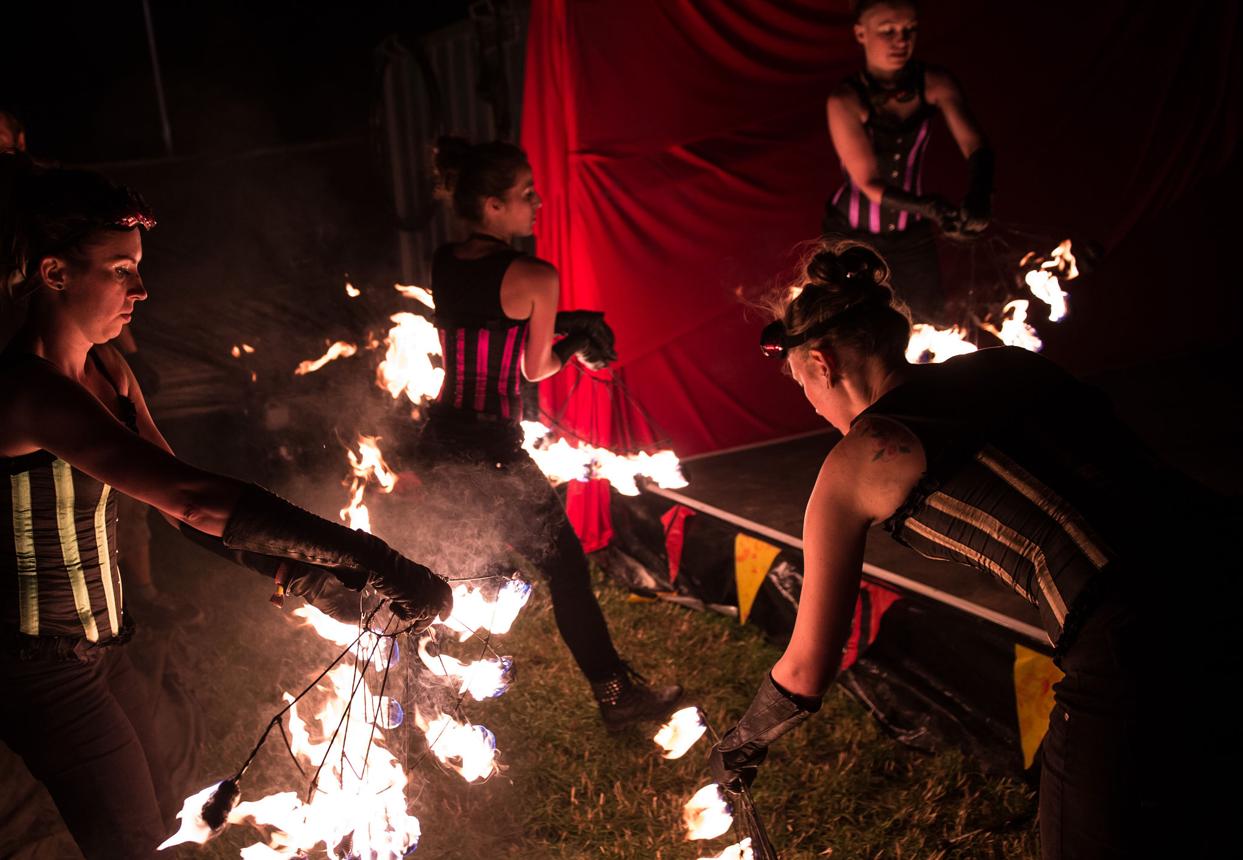
What followed was the kind of audition designed to make viewers grip their chairs: blazing hoops, rapid spins, dramatic choreography and a performer who seemed completely comfortable dancing in the middle of an inferno.
But while the performance looked intense and perfectly controlled from the audience, the story behind the scenes was considerably less serious.
According to the playful backstage version of events surrounding the fictional act, Fire Circle’s biggest challenge was not the choreography, the flames or even the pressure of performing in front of the judges.
It was keeping everyone from asking, “Is that supposed to be on fire?”

A Name That Practically Required Flames
Some talent acts have names that leave plenty of room for interpretation.
Fire Circle was not one of them.
From the moment the performers arrived, the name seemed to come with an unwritten production instruction: there must be fire.
The act’s concept was simple but visually enormous. Performers moved around a large circular apparatus while flames appeared at carefully choreographed moments. The routine combined elements of circus performance, dance, balance and fire manipulation.
The goal was not simply to make something burn.
The goal was to make fire look like choreography.
And that required an enormous amount of preparation.
Behind the scenes, the performers reportedly approached rehearsals with the concentration of professional athletes. Every movement had to be memorized. Every transition had to be precise. Every piece of equipment had to be checked.
Because with a normal dance routine, missing a step might make you look awkward.
With a fire routine, missing a step can make everybody backstage suddenly very interested in the emergency procedures.
The Backstage Comedy Started Early
The funniest part of Fire Circle’s fictional backstage story was how dramatically different the atmosphere could be from what viewers saw on television.
Onstage, the performers looked fearless.
Backstage, however, the mood was closer to a family preparing for a very unusual camping trip.
Someone was checking equipment.
Someone else was checking it again.
Another person was asking whether everything had been checked.
And then came the classic question:
“Where’s the water?”
Nobody wanted to answer.
Not because the water was missing.
Because everybody suddenly realized how important the question was.
The performers themselves were reportedly much calmer.
One joked that the most dangerous thing about the audition wasn’t the fire.
“It’s waiting for the music cue,” the fictional performer quipped.
That might be the most relatable part of the entire act.
Even when someone is surrounded by flames, there is always a moment when they are thinking, Please don’t let me miss my entrance.
The Rehearsal Room Was a Different Kind of Circus
Before the big performance, Fire Circle had to transform a complicated routine into something that looked effortless.
That meant repeating sequences again and again.
The choreography started slowly.
Step.
Turn.
Pause.
Spin.
Reset.
Then repeat.
Eventually, the movements became faster and more ambitious.
The performers practiced their timing until they could almost perform the routine without thinking.
Meanwhile, the production team had its own choreography.
Cameras needed to be positioned correctly.
Lighting cues had to match the performance.
Music had to hit at exactly the right moment.
And everyone involved needed to know where they were supposed to be.
The performers might have been the stars of the act, but backstage there was another cast of people working just as hard to make the illusion possible.
The funny part?
At least one person always seemed to be walking around carrying something that looked completely mysterious to everyone else.
“What’s that?”
“Equipment.”
“What does it do?”
“Fire stuff.”
“Very helpful.”
Then Came the Audition
When Fire Circle finally stepped onto the AGT-style stage, the atmosphere changed instantly.
The performers stood in position.
The audience waited.
The music began.
And then the flames appeared.
The first burst immediately transformed the stage.
What had looked like an ordinary performance area seconds earlier became a glowing circle of movement and light.
The performers moved through the routine with precision, using the circular apparatus as both a prop and a centerpiece.
They spun.
They balanced.
They shifted positions.
The flames followed their movements, creating the impression that the entire stage was rotating around them.
The audience reacted with a mixture of amazement and nervous laughter.
There is something uniquely terrifying about watching somebody calmly perform a complicated trick while surrounded by fire.
The audience knows the performer is trained.
The audience knows safety professionals are nearby.
The audience knows this is television.
And yet a small part of the brain still says:
That person is standing next to FIRE.
The Judges Get the Full Experience
As the routine grew more ambitious, the judges’ expressions became part of the entertainment.
One judge appeared stunned.
Another leaned forward.
Another looked as though they were mentally calculating the distance between their chair and the nearest exit.
The fictional Fire Circle performance was designed to build throughout the routine rather than reveal everything immediately.
The first section established the visual style.
The middle section increased the speed.
Then came the big finale.
The music rose.
The performers accelerated.
The flames appeared around the circular apparatus.
The audience erupted.
And Fire Circle finished in a dramatic pose as the final notes echoed through the theater.
For a moment, nobody moved.
Then came the applause.
The Funniest Moment Came After the Flames
The performers had just completed the most intense portion of the audition.
They were standing there, breathing heavily and waiting for the judges’ comments.
Then one performer reportedly looked toward the backstage area.
And smiled.
Why?
Because someone had apparently been holding a fire extinguisher throughout the entire performance.
The sight instantly broke the tension.
Suddenly, the supposedly fearless fire performers were laughing.
The audience laughed too.
It was a reminder that behind every dramatic television performance are ordinary people trying to do extraordinary things without accidentally turning the production meeting into a disaster movie.
What Viewers Wouldn’t See
Television can make a complicated performance appear simple.
Fire Circle’s fictional audition would be no different.
Viewers would see flames, costumes, music, dramatic camera angles and a spectacular finale.
They would not see the hours of rehearsal behind those 90 seconds.
They would not see the equipment checks.
They would not see the repeated practice runs.
They would not see the moments when something didn’t work and the performers had to start again.
And they certainly wouldn’t see all the jokes made backstage to keep everyone relaxed.
That is where the real personality of an act often appears.
The stage may be serious.
Backstage rarely is.
Why Fire Circle Stands Out
The strongest part of Fire Circle isn’t simply the danger.
It is the combination of danger and performance.
Anyone can create a visual spectacle.
Creating one that also has rhythm, personality, storytelling and precision is much harder.
Fire Circle’s concept works because the flames are not treated as a gimmick. They become part of the choreography.
The circle becomes a moving stage.
The fire becomes part of the visual language.
And the performers become the center of a carefully constructed piece of entertainment.
That combination could make Fire Circle memorable to viewers long after the flames disappear.
One Last Laugh Before Leaving the Stage
After the fictional audition, the performers finally had a chance to relax.
Or at least they tried.
Someone reportedly asked whether they were nervous before performing.
The answer was simple:
“Not until someone reminded me that the whole thing was on fire.”
That perfectly captures the strange balance behind a performance like Fire Circle.
Onstage, they are fearless professionals.
Backstage, they are human beings who occasionally look at a flaming prop and think, Yep. This is definitely a normal career choice.
And perhaps that’s exactly what makes a fire act so entertaining.
The audience sees danger.
The performers see choreography.
The crew sees safety procedures.
And everyone else sees a spectacular few minutes of television.
Fire Circle, in this fictional AGT-style story, would leave the stage with exactly what a great talent-show act should deliver: excitement, suspense, laughter and one unforgettable visual.
The flames may eventually go out.
But the image of a performer calmly spinning through a blazing circle while an entire audience holds its breath?
That is the kind of moment that keeps talent-show fans watching.