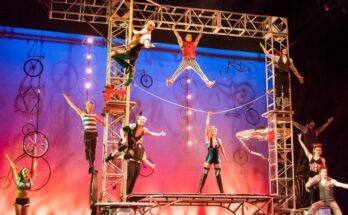
There are string groups that make beautiful music.
There are string groups that bring classical elegance to the stage.
And then there are The Wild Strings, a fictional America’s Got Talent act determined to prove that violins, violas, cellos and basses can rock just as hard as any guitar.
When the five performers walk onto the AGT stage, they look confident, stylish and completely prepared.
That is the version the television cameras see.
Behind the curtain, however, the reality is much funnier.
One musician is looking for a missing bow.
Another is worried about a tiny piece of rosin.
Someone has forgotten where they put their water bottle.
And the group’s unofficial snack manager is apparently more concerned about chocolate than the Golden Buzzer.
Then the lights come up.
The music starts.
And suddenly, all the backstage chaos disappears.
Five Musicians With One Very Big Idea
The Wild Strings are built around five fictional musicians who want to take string performance somewhere unexpected.
Rather than standing still and performing a traditional arrangement, the group combines classical technique with pop, rock and cinematic sounds.
The violins provide the speed and drama.
The viola fills out the middle of the arrangement.
The cello brings emotion and power.
The bass gives the performance a rhythmic foundation.
But the group’s biggest weapon may be their chemistry.
They don’t simply play together.
They move together.
They react to one another.
They turn musical transitions into visual moments.
The result is the sort of performance that can make an audience forget that the performers are holding instruments traditionally associated with concert halls.
For a few minutes, the stage becomes a rock arena.
The Performance Begins Quietly
The fictional audition starts with almost no movement.
One violin plays a soft melody.
The theater becomes quiet.
The other musicians wait.
Then the cello enters.
A second violin joins.
The viola creates another layer.
The bass quietly builds underneath everything.
For a moment, the performance feels elegant and traditional.
Then the rhythm changes.
The lights become more dramatic.
The musicians begin moving across the stage.
The bows rise.
The tempo increases.
And the audience realizes that The Wild Strings have been saving something much bigger for the second half.
The music explodes into a powerful combination of classical technique and rock-inspired energy.
The crowd begins clapping.
One judge stands.
Another starts smiling.
By the final section, the performers are completely in control.
Then they hit the final note.
Silence.
One beat.
Two.
And then the theater erupts.
But Backstage, Nothing Is Under Control
The polished performance is only possible because of hours of preparation.
And those hours don’t always go smoothly.
The Wild Strings’ backstage routine begins with a serious rehearsal.
At least, that is what everyone intends.
Five minutes later, one member starts making exaggerated rock-star poses with a violin.
Another begins pretending to play an imaginary electric guitar.
The cellist joins in.
Someone starts dancing.
The rehearsal becomes a comedy routine.
Eventually, a crew member walks past and asks:
“Are you rehearsing?”
The group immediately stands straight.
“Yes.”
A pause.
“Very seriously.”
The crew member walks away.
Everyone starts laughing again.
The Missing Bow Mystery
Then comes a real emergency.
One of the violinists can’t find a bow.
Not a spare bow.
The bow.
The one needed for the performance.
Suddenly, everybody becomes a detective.
They check the instrument cases.
The chairs.
The rehearsal area.
The dressing room.
Behind the stage.
Nothing.
One member asks, “When did you last have it?”
The violinist thinks.
“I don’t know.”
“That’s not helpful.”
“I know.”
The search continues.
Then someone notices the missing bow.
It is leaning against the wall approximately three feet from the person who has been searching for it.
Nobody speaks.
The violinist slowly walks over.
“Found it.”
The others stare.
“Where was it?”
“Right there.”
The group bursts into laughter.
The crisis is over.
The bow has been located.
The performer’s reputation as an organized musician may never recover.
The Rosin Disaster
Every string musician knows that small equipment details matter.
Rosin helps create the friction needed between bow hair and strings.
For The Wild Strings, it also becomes the source of one of the funniest backstage moments.
One member accidentally drops a rosin container.
It breaks.
Tiny pieces scatter across the floor.
Everyone freezes.
The musician looks down.
Then looks at the group.
“This is bad.”
Someone replies:
“It is rosin. We have more.”
“Yes, but this was my lucky rosin.”
That sentence causes immediate confusion.
“What makes rosin lucky?”
“I don’t know. It just is.”
The group begins laughing.
A crew member helps clean everything up.
The musician eventually accepts a replacement.
But the lucky rosin becomes a running joke for the rest of the day.
The Snack Situation
Every successful group needs someone responsible for food.
For The Wild Strings, that person is Diego, the fictional bass player.
Diego has an emergency snack bag.
It contains enough food to survive several rehearsals.
There are granola bars.
Fruit.
Crackers.
Gummies.
Chocolate.
And, inexplicably, three different types of chips.
Nobody understands why there are so many snacks.
Diego’s explanation is simple:
“Musicians need fuel.”
The others accept this.
Until they discover the emergency chocolate.
The emergency chocolate is apparently not communal.
It is reserved for serious situations.
“What counts as a serious situation?” one member asks.
Diego responds:
“Anything after 7 p.m.”
Nobody knows whether he is joking.
Nobody risks finding out.
The Tuning Debate
As the performance approaches, the group begins tuning.
This is when things become extremely serious.
One musician plays a note.
Another listens.
“It sounds sharp.”
“It doesn’t.”
“It does.”
“Barely.”
“Barely is still sharp.”
A third member gets involved.
“Can you both stop?”
The disagreement continues.
Eventually, someone suggests checking with a tuner.
The tuner confirms that the note is slightly off.
Everyone looks at the person who said it was fine.
He shrugs.
“I said it was barely off.”
At least the argument is settled.
The instruments are ready.
The musicians are ready.
Mostly.
Five Minutes Before the Stage
The atmosphere changes dramatically during the final countdown.
The jokes become quieter.
The musicians check their instruments one final time.
Costumes are adjusted.
Microphones are tested.
The group gathers together.
For the first time all day, nobody is laughing.
Their leader reminds everyone:
“Listen to each other.”
Another member says:
“Have fun.”
The cellist adds:
“Please don’t lose anything.”
Everyone looks at the violinist.
The violinist raises both hands.
“The bow is here.”
The group laughs one last time.
Then the stage manager gives them the signal.
It’s time.
The Golden-Buzzer Moment
After the explosive fictional performance, the judges are clearly impressed.
The audience rises.
The performers exchange nervous smiles.
Then one judge reaches toward the Golden Buzzer.
For a second, the group doesn’t understand what is happening.
Then the button is pressed.
BOOM!
Golden confetti rains down over the stage.
The Wild Strings freeze.
Then all five musicians scream.
One member jumps into another’s arms.
The cellist laughs uncontrollably.
The violinists look toward the ceiling.
The bass player protects his instrument from the falling confetti.
It is the moment they dreamed about.
The moment that seemed impossible during all those long rehearsals.
The Golden Buzzer has been pressed.
Then the Confetti Gets Everywhere
The audience sees magic.
The performers see gold paper.
Lots of gold paper.
It lands on their instruments.
It sticks to their clothes.
It gets caught in their hair.
One musician finds a piece inside a shoe.
Another discovers several pieces inside a jacket pocket.
Then Diego checks his emergency snack bag.
There is confetti inside.
He looks horrified.
“Not the chocolate!”
The others collapse into laughter.
The Golden Buzzer celebration has officially become a confetti emergency.
Someone tries to brush the paper off a violin case.
It doesn’t work.
More pieces appear.
At this point, the group decides to stop fighting.
If they are going to leave the stage covered in golden confetti, they might as well enjoy it.
The Emotional Moment Behind the Laughter
Underneath all the jokes, however, the Golden Buzzer represents something enormous.
The five musicians have spent months developing their sound.
They have rehearsed transitions until they were exhausted.
They have repeated difficult sections.
They have argued about tempo.
They have tuned instruments over and over.
They have dealt with nerves.
And now a judge has essentially told them:
You made us believe in you.
For performers, that can be overwhelming.
The laughter gives way to hugs.
Someone wipes away tears.
Another member calls their family.
The group stands together for several seconds, trying to understand what just happened.
Then someone notices another piece of confetti.
The laughter starts again.
Why The Wild Strings Could Stand Out
On a show filled with singers, dancers, magicians, comedians and unusual talents, The Wild Strings have one major advantage.
They are difficult to forget.
Their instruments create a recognizable sound.
Their staging gives the performance visual energy.
And their personalities make the group approachable.
But perhaps most importantly, they don’t treat their instruments as museum pieces.
They treat them as tools for entertainment.
The violin can be dramatic.
The cello can be powerful.
The bass can be rhythmic.
The viola can be unexpectedly energetic.
Together, they create something that feels modern without abandoning their musical roots.
The Challenge After the Golden Buzzer
Of course, a Golden Buzzer is only the beginning.
The next challenge is even harder.
How do The Wild Strings make the next performance bigger?
They could introduce an unexpected genre.
They could create a new arrangement.
They could incorporate additional visual effects.
They could even perform an original composition.
But the group will need to avoid one major danger: trying too hard to top the first performance.
Sometimes bigger isn’t better.
Sometimes the strongest performance is simply the one that feels authentic.
The Wild Strings’ greatest strength is their chemistry.
Whatever comes next, they will need to preserve it.
More Than Five Musicians
Behind the stage lights, The Wild Strings are not superheroes.
They are five musicians who lose bows, argue about tuning, protect emergency chocolate and laugh when things go wrong.
That’s what makes their story fun.
The audience sees the perfect final note.
They don’t see the musician who forgot where he put his bow.
They see the Golden Buzzer.
They don’t see the emergency snack bag covered in confetti.
They see confidence.
They don’t see the nerves five minutes earlier.
And perhaps that is exactly why America’s Got Talent remains so entertaining.
The magic isn’t only in the performance.
It’s in everything that happens before it.
For The Wild Strings, the fictional Golden Buzzer moment is the payoff for years of hard work—but the backstage chaos is what gives the story its personality.
They came to America’s Got Talent hoping to make string music feel wild.
They succeeded.
They also managed to lose a bow, destroy a piece of lucky rosin and contaminate the emergency chocolate with golden confetti.
Not bad for one day at work.