Most people reach for a calculator when they see a long string of numbers.
The Human Calculator reaches for absolutely nothing.
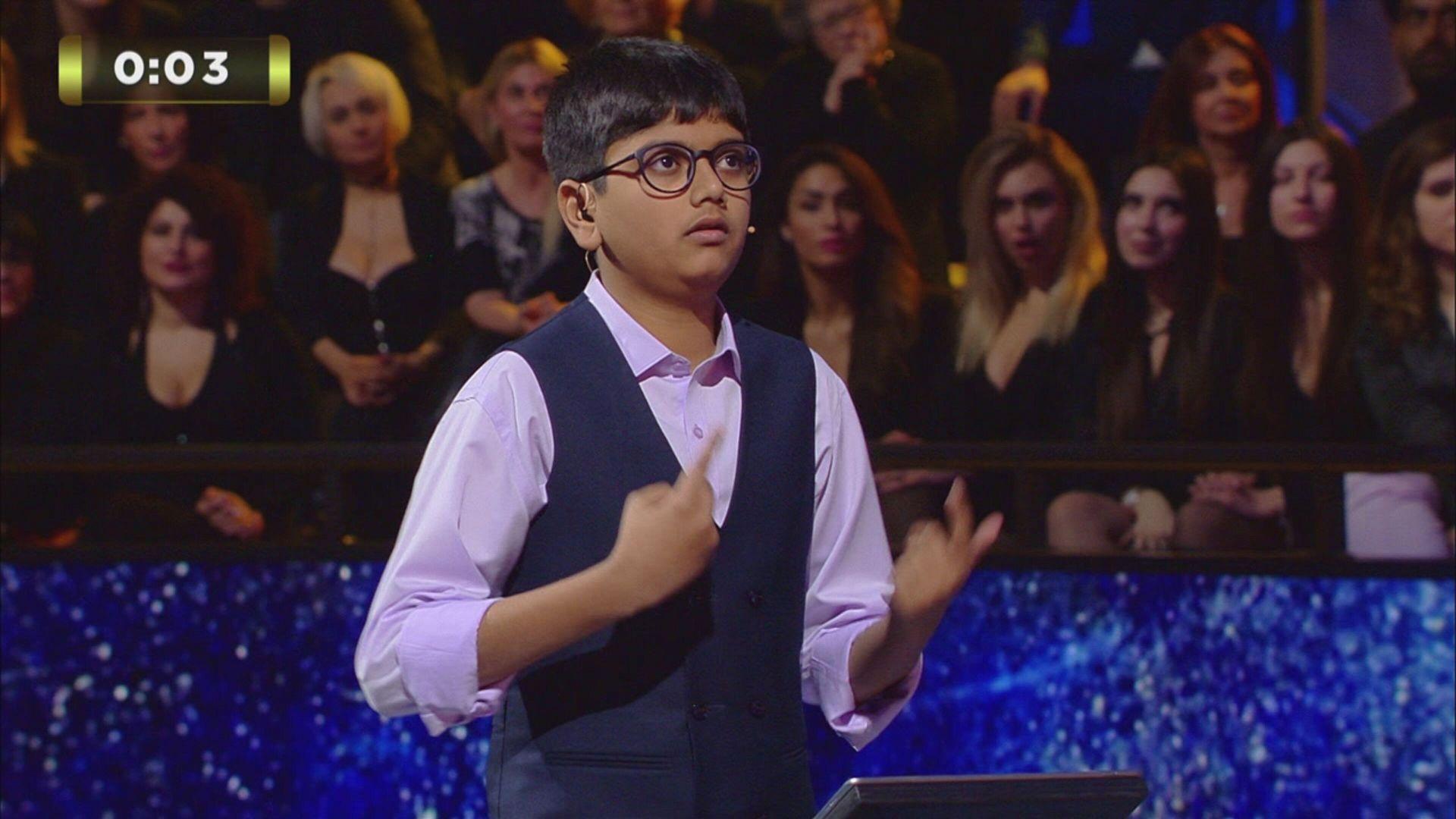
The fictional America’s Got Talent–style performer walked onto the stage carrying no musical instrument, no elaborate costume and no giant prop.
Just a microphone, a confident smile and a brain that seemed to operate at a completely different speed from everyone else’s.
But before the performance became an extraordinary display of mental mathematics, backstage life was surprisingly ordinary.
There was a missing notebook.
A nervous contestant who accidentally wrote the wrong number on a rehearsal board.
A production assistant who asked whether the performer ever used a calculator.
And one hilarious moment when The Human Calculator reportedly spent several minutes looking for a phone that was sitting directly in his pocket.
The numbers were under control.
The belongings were not.

The Idea Behind The Human Calculator
The fictional performer behind The Human Calculator had been fascinated by numbers since childhood.
While other children enjoyed puzzles and video games, he loved multiplication tables.
He could spend hours experimenting with patterns.
Eventually, simple arithmetic became mental challenges.
He began calculating increasingly complicated problems in his head.
But he didn’t want to perform mathematics like a classroom lesson.
He wanted to turn it into entertainment.
That meant adding speed, suspense and audience participation.
From Classroom Trick to Stage Act
The performer started by challenging friends.
Someone would give him a number.
He would multiply it.
Then divide it.
Then perform another calculation.
Soon, people began giving him larger numbers.
He kept answering.
Eventually, his friends joked:
“You need to take this to television.”
The idea stayed with him.
Years later, the fictional Human Calculator received an opportunity to audition for AGT.
Audition Day
The morning of the audition was much less mathematical than expected.
The performer arrived carrying a notebook filled with calculations.
He carefully reviewed his routine.
He checked the numbers.
He checked them again.
Then he discovered something alarming.
His favorite pen was missing.
He searched his bag.
Nothing.
He checked the table.
Nothing.
He asked a production assistant.
Nothing.
Finally, another performer pointed at his hand.
He was already holding the pen.
Everyone laughed.
The Human Calculator looked down.
“I was testing you.”
Nobody believed him.
The Missing Notebook
The next problem was his notebook.
It contained pages of practice calculations.
He couldn’t find it.
He searched his backpack.
He checked backstage.
He looked under chairs.
Eventually, the notebook was discovered beneath the very chair he had been sitting on.
A teammate laughed:
“You can calculate six-digit numbers but can’t locate your notebook.”
The Human Calculator smiled.
“Different skill.”
Can a Calculator Beat a Human?
During rehearsal, one production assistant jokingly asked:
“Do you ever use a calculator?”
The performer thought for a moment.
“Sometimes.”
Everyone looked surprised.
“When?”
He smiled.
“When I’m checking my restaurant bill.”
The room erupted in laughter.
Apparently, even a human calculator occasionally wanted technology to handle the tip.
Preparing the Stage
Unlike many AGT acts, The Human Calculator didn’t need complicated equipment.
But the production team still had plenty to organize.
Large screens displayed numbers.
Cameras were positioned to capture the performer and audience reactions.
A whiteboard was prepared.
The judges were given instructions.
The lighting was designed to create suspense whenever a difficult calculation appeared.
The simplicity was part of the appeal.
The audience could see the numbers.
They could watch the performer.
There was nowhere to hide.
The Final Rehearsal
Before the audition, the performer ran through the routine.
The production team tested several examples.
The performer answered quickly.
The crew checked the answers independently.
Everything matched.
Then someone accidentally entered a number incorrectly.
The performer immediately noticed.
“That’s not the number you gave me.”
The stage manager checked the screen.
He was right.
Everyone laughed.
Even the crew couldn’t fool the Human Calculator.
Walking Onto the Stage
When The Human Calculator was introduced, the audience applauded.
He walked onto the stage.
The judges looked curious.
There was no elaborate entrance.
No dramatic costume.
No dancers.
Just a performer standing beneath a spotlight.
One judge asked:
“So, what exactly do you do?”
He smiled.
“I calculate.”
The audience laughed.
The First Challenge
A judge gave him a multiplication problem.
The numbers appeared on the screen.
The Human Calculator looked at them.
He paused for barely a second.
Then gave the answer.
Correct.
The audience applauded.
The judge checked the answer.
Correct.
The performer smiled.
“That was the warm-up.”
The audience reacted immediately.
Bigger Numbers
The challenges became harder.
The judges supplied larger numbers.
The performer calculated them mentally.
The answers appeared on the screen.
Correct.
Again.
Correct.
The audience began cheering before the answers were even confirmed.
The judges started looking at one another in disbelief.
Audience Participation
Then came the most entertaining part.
The Human Calculator invited an audience member to choose numbers.
The volunteer selected two large numbers.
The performer repeated them.
Then calculated the result.
Correct.
The audience member stared at him.
“How did you do that?”
The performer laughed.
“I like numbers.”
It was an understatement.
The Unexpected Comedy
One judge decided to make things more difficult.
Instead of giving a clean calculation, they deliberately spoke the numbers slowly.
The Human Calculator waited patiently.
Another judge laughed.
“Are you okay?”
He replied:
“I’ve got time.”
The audience laughed.
Then he gave the correct answer.
The Speed Round
The final challenge became a speed round.
Numbers appeared one after another.
The performer answered rapidly.
The audience counted along.
Five.
Six.
Seven.
Eight.
The numbers became increasingly complicated.
Still, the answers kept coming.
The judges began laughing in disbelief.
One judge put both hands on their head.
Another simply said:
“This is ridiculous.”
The Final Calculation
For the finale, the judges selected a particularly complicated calculation.
The audience became quiet.
The performer looked at the numbers.
He closed his eyes for a moment.
Then opened them.
He gave the answer.
The judges checked.
Correct.
The theater erupted.
The audience stood.
The performer smiled.
He had done it.
The Golden Buzzer
Then came the moment nobody expected.
One judge stood.
The Human Calculator looked confused.
The judge walked toward the Golden Buzzer.
The audience screamed.
The button was pressed.
Gold confetti exploded across the stage.
The performer froze.
Then he laughed.
A piece of confetti landed on the whiteboard.
Another landed on the giant number display.
The Human Calculator looked at the falling gold paper and joked:
“Can I calculate how much this weighs?”
The judges laughed.
Backstage Celebration
The performer returned backstage to cheering family and friends.
His supporters hugged him.
Someone shouted:
“You did it!”
He smiled.
Then another person asked:
“What was the answer to the final problem?”
Everyone burst out laughing.
Even after a Golden Buzzer, they were still thinking about mathematics.
The Confetti Calculation
Later, the performer joked that he had calculated something important.
The probability of being covered in gold confetti?
“Apparently 100 percent.”
He also discovered that confetti had landed inside his shoes.
He shook one.
Gold paper fell out.
He shook the other.
More appeared.
“There’s a pattern here,” he said.
His friend replied:
“The pattern is that you’re covered in confetti.”
The Backstage Interview
During the fictional interview, the host asked:
“Did you expect the Golden Buzzer?”
“No.”
“What were you thinking when it happened?”
“I forgot the numbers.”
The host laughed.
“Really?”
“For about five seconds.”
That might have been the first calculation The Human Calculator couldn’t immediately solve.
Viewers React
When the fictional performance aired, viewers quickly became fascinated.
Fans began sharing clips of the calculations.
Some viewers tried solving the problems themselves before the performer gave the answers.
Others were fascinated by his calm personality.
Unlike many high-energy acts, The Human Calculator didn’t need explosions or elaborate choreography.
His brain was the spectacle.
The Science of the Performance
Mental calculation can involve many different strategies.
Performers may use pattern recognition, number decomposition, memory techniques and rapid estimation.
The fictional Human Calculator combined those techniques into a stage performance.
The important entertainment element was not simply knowing an answer.
It was making the audience feel the suspense of watching the calculation happen in real time.
The People Behind the Numbers
The production team played an important role.
Researchers checked calculations.
Stage managers coordinated cues.
Camera operators captured the judges’ reactions.
Lighting designers created dramatic moments.
Graphic designers displayed numbers clearly.
Even though the performance looked simple, considerable planning went into making the mathematics understandable for television audiences.
The Funniest Moment of the Day
After the show, the Human Calculator finally found his missing notebook.
It had been inside his backpack the entire time.
He opened it.
Inside was a note from one of his teammates:
“You can calculate anything except where you put your stuff.”
He laughed.
“Fair.”
Then he looked around.
“Has anyone seen my phone?”
Everyone groaned.
It was in his pocket.
Again.
Why The Human Calculator Stood Out
Talent competitions are usually filled with singers, dancers, magicians and physical performers.
The Human Calculator offered something completely different.
He transformed an activity normally associated with classrooms and spreadsheets into live entertainment.
There was suspense.
There was audience participation.
There was comedy.
And, most importantly, there was genuine skill.
More Than Mathematics
The fictional journey of The Human Calculator also demonstrated something important about talent.
Not every extraordinary ability looks extraordinary at first.
A talent for mathematics might seem ordinary in a classroom.
On a huge stage, surrounded by flashing lights and thousands of spectators, it can become something remarkable.
The performer didn’t need to pretend to be someone else.
He simply made his unusual ability entertaining.
The Road Ahead
After receiving the fictional Golden Buzzer, The Human Calculator faced a new challenge.
How do you make mental mathematics even more exciting?
The answer wouldn’t be simple.
The performer would need harder calculations.
More audience interaction.
More surprises.
And perhaps fewer missing notebooks.
But he had already demonstrated that numbers could become a spectacle.
His performance wasn’t about proving that calculators were unnecessary.
It was about showing audiences that the human brain can still surprise us.
And as the last pieces of Golden Buzzer confetti floated onto the stage, one thing became clear: